

When we hear the word freethought, it is easy to imagine a modern movement that emerged in response to organised religion. In reality, the desire to ask questions, challenge accepted wisdom and seek evidence has been part of the human story for thousands of years.
Freethought is not about telling people what to believe. Rather, it is about how we arrive at our beliefs. It encourages us to examine claims critically, weigh the evidence, remain open to new information, and be willing to change our minds when the facts lead us in a different direction. It values reason over authority, curiosity over certainty, and intellectual honesty over unquestioning acceptance.
The modern secular movement owes much to this tradition, but the roots of freethought stretch back to many different cultures and civilisations. From the philosophers of ancient Greece to the scholars of Timbuktu, from Enlightenment thinkers to today’s advocates of scientific literacy and freedom of conscience, humanity has repeatedly produced individuals who dared to ask, “How do we know this is true?”

What is Freethought?
Freethought is an approach to thinking rather than a set of beliefs. A freethinker evaluates ideas using reason, evidence and critical enquiry instead of accepting them solely because they are supported by tradition, authority or popular opinion.
This does not mean freethinkers always reach the same conclusions. Some are religious, some are not. Some are philosophers, scientists, teachers, artists or ordinary citizens. What unites them is a commitment to intellectual independence.
Freethought also requires humility. Evidence changes. New discoveries are made. Good freethinkers recognise that changing one’s mind in light of better evidence is not a weakness but a strength.
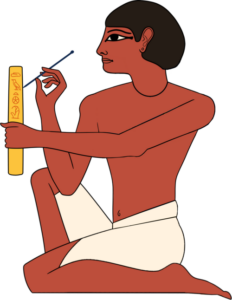
The Ancient World: The First Great Questioners
Long before the word freethought existed, people were asking difficult questions about nature, morality and the human condition.
In ancient Greece, philosophers began seeking natural explanations for events that had previously been attributed to divine intervention. Socrates became famous for asking probing questions that exposed weak arguments and encouraged people to think for themselves. Rather than presenting answers, he challenged assumptions.
Democritus proposed that everything might be made of tiny indivisible particles—an astonishingly early idea resembling the modern concept of atoms. Epicurus argued that happiness could be found through friendship, moderation and freedom from unnecessary fear, including fear of supernatural punishment.
Elsewhere, traditions of independent thought were also developing.
In ancient India, the Cārvāka school questioned religious authority and argued that knowledge should be grounded in direct observation and experience rather than revelation.
In ancient China, thinkers such as Confucius and Mozi encouraged people to consider ethics, good governance and social responsibility through careful reasoning. Although their philosophies differed greatly, both contributed to traditions of thoughtful debate and moral enquiry.
These civilisations remind us that questioning accepted ideas was never confined to one place or one culture.

African Traditions of Intellectual Enquiry
Discussions about the history of freethought often overlook Africa, creating the mistaken impression that intellectual enquiry was centred only in Europe and Asia. The historical record tells a different story.
Africa has a long tradition of scholarship, philosophical reflection and critical discussion. While these traditions were not always “freethought” in the modern secular sense, they demonstrate that reasoned enquiry and the pursuit of knowledge have deep roots on the continent.
One of the best-known examples is the great scholarly city of Timbuktu in present-day Mali. Between the fifteenth and seventeenth centuries, it became an internationally respected centre of learning, attracting students and scholars from across West Africa and beyond. Its famous manuscript collections include hundreds of thousands of works covering subjects as diverse as astronomy, mathematics, medicine, law, history, commerce, poetry and philosophy.
Most of these manuscripts were written within an Islamic intellectual tradition rather than a secular one. They should not be presented as evidence of an ancient atheist movement. However, they reveal a vibrant culture of scholarship in which ideas were studied, debated, copied and preserved with remarkable care. They stand as powerful evidence that Africa possessed rich written intellectual traditions long before colonial rule.
Elsewhere on the continent, Ethiopian philosopher Zera Yacob wrote the Hatata (“Inquiry”) in the seventeenth century. Rather than simply accepting inherited beliefs, he argued that reason should play a central role in determining what is true and good. His work has been compared with some of the great rationalist traditions of Europe, although it developed independently.
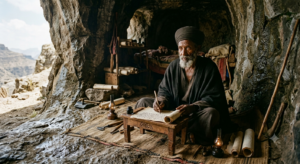
African societies also cultivated intellectual enquiry through oral traditions. Elders, storytellers and community leaders often encouraged reflection through proverbs, dialogue and public discussion. Wisdom was not merely memorised; it was explored, tested and applied to real life.
Recognising these traditions broadens our understanding of humanity’s shared intellectual heritage. The desire to ask questions and seek understanding belongs to no single civilisation.
The Middle Ages and the Preservation of Knowledge
In Europe, the Middle Ages are sometimes portrayed as a period when independent thought disappeared. The reality is more complex.
Religious institutions exercised considerable influence, and questioning accepted doctrine could carry serious risks. Yet scholarship continued in monasteries and, later, universities. Ancient Greek works were preserved, translated and studied.
Across the Islamic world, scholars made extraordinary contributions to mathematics, astronomy, medicine and philosophy. They translated and expanded upon classical learning, helping to preserve knowledge that might otherwise have been lost. Their work later influenced the European Renaissance and the Scientific Revolution.
Even in periods when freedom of thought was constrained, curiosity never disappeared.
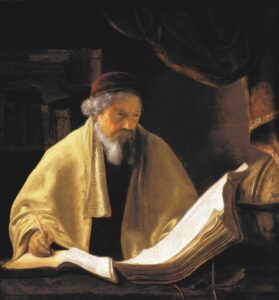
The Renaissance: Rediscovering Curiosity
Beginning in the fourteenth century, the Renaissance marked a renewed interest in classical learning, art and human potential.
The invention of the printing press transformed society by making books more widely available. Ideas could spread further and faster than ever before. Scholars compared texts, questioned traditional interpretations and explored new discoveries.
Artists, scientists and philosophers increasingly looked to observation and experience as sources of knowledge. This spirit of curiosity laid important foundations for the centuries that followed.
The Enlightenment: The Age of Reason
The seventeenth and eighteenth centuries saw freethought flourish in what became known as the Enlightenment.
Thinkers such as John Locke argued that governments should protect individual rights rather than rule by divine authority. Voltaire defended freedom of expression and religious tolerance. David Hume challenged assumptions about knowledge and encouraged sceptical enquiry. Mary Wollstonecraft argued passionately that women deserved the same educational opportunities and rights as men.
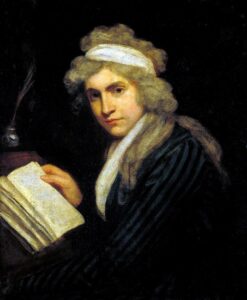
These thinkers did not agree on everything. What united them was a belief that reason, evidence and open debate were essential to human progress.
Many of the freedoms we value today—including freedom of conscience, freedom of speech and the separation of religion and government—owe much to the intellectual climate of the Enlightenment.
Science and Modern Freethought
The growth of modern science further strengthened the principles of freethought.
Charles Darwin transformed biology through his theory of evolution by natural selection. His work demonstrated the power of careful observation and evidence to explain the natural world.
Scientists such as Marie Curie showed how disciplined research could expand human knowledge despite enormous personal challenges. Philosopher Bertrand Russell championed scepticism, logical thinking and the importance of questioning unsupported claims.
Science and freethought are closely related but not identical. Science provides methods for investigating the natural world, while freethought is a broader commitment to evaluating all kinds of claims using reason and evidence.
Freethought and Human Rights
Freethought has also influenced the development of more open and inclusive societies.
The belief that individuals should be free to think for themselves supports freedom of religion, freedom from religion and freedom of conscience. It encourages democratic debate, protects freedom of expression and promotes equal treatment under the law.
Freethought has contributed to movements advocating universal education, women’s rights, LGBTQ+ equality, scientific literacy and secular government. These achievements were made possible through the efforts of many different social movements, but they share a common commitment to questioning injustice and challenging traditions that deny people equal dignity.

Freethought in South Africa Today
South Africa is home to people of many religions, cultures and worldviews. Our democracy recognises that this diversity is a strength.
The Constitution protects freedom of conscience, religion, thought, belief and opinion. These rights allow every person to follow their own convictions – or none at all – without fear of discrimination.
The South African Secular Society was established in 2014. For this organisation, freethought is not about replacing one orthodoxy with another. It is about defending every person’s right to examine ideas freely, express their views respectfully and participate equally in public life.
In an age of misinformation, conspiracy theories and rapidly developing artificial intelligence, these values are more important than ever. Critical thinking helps us distinguish reliable evidence from speculation, recognise manipulation and make informed decisions as citizens.
Freethought also reminds us that disagreement need not become hostility. We can challenge ideas while respecting the people who hold them.
A Living Tradition
The history of freethought is, ultimately, the history of people refusing to stop asking “Why?” That question has led to scientific discoveries, social reform, greater human freedom and a deeper understanding of ourselves and the world around us.
As members and supporters of the South African Secular Society, we are part of this continuing tradition. Freethought does not ask us to arrive at predetermined conclusions. It asks only that we remain curious, think critically, follow the evidence wherever it leads, and defend the freedom of every person to do the same.