

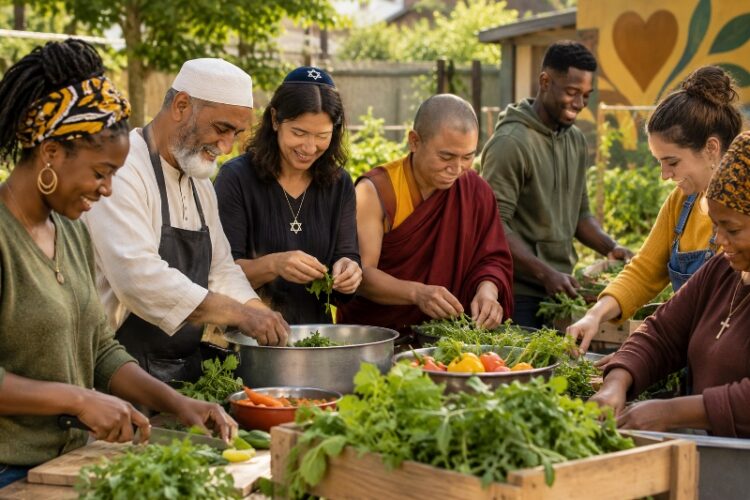
Secular Society member, Emma Campbell, advocates that there be respect for all beliefs, including non-belief.
South Africa is a country shaped by different cultures, traditions, religions and ways of understanding the world. In our homes, workplaces, schools and communities, we encounter people whose beliefs differ from our own.
Some people find meaning through religion or spirituality. Others find it through philosophy, relationships, nature or a sense of responsibility towards humanity. Some believe in a god or gods; others do not. Many people are still figuring out what they believe.
Living in a diverse society means learning to navigate these differences. But what does it actually mean to respect someone whose beliefs we don’t share?
Respect doesn’t require agreement
It’s easy to respect beliefs that resemble our own. The challenge comes when we encounter ideas that seem unfamiliar, unreasonable or even fundamentally wrong to us.
Respecting someone is not the same as agreeing with them.
We can recognise another person’s dignity, listen to their perspective and treat them fairly without accepting their conclusions. Equally, we can question an idea, challenge an argument or disagree with a practice without insulting the person who holds that belief.

Curiosity is better than assumption
When we encounter beliefs that differ from our own, it can be tempting to make assumptions about the people who hold them. However, people are rarely so straightforward.
Two people can share the same religion but interpret its teachings very differently. Two atheists can have entirely different political views, moral priorities and philosophies of life. A person’s beliefs are shaped by many factors, including their upbringing, experiences, relationships and the questions they have asked along the way.
Rather than assuming we know what someone thinks, we can ask. What does that belief mean to them? How did they arrive at it? What experiences have shaped their perspective?
We don’t have to agree with the answers. Sometimes, simply understanding where someone is coming from can change the nature of a conversation.
We should be able to discuss difficult questions, challenge claims and reconsider traditions without fear of discrimination or coercion. Respectful dialogue doesn’t eliminate disagreement; it creates the conditions in which disagreement can happen constructively.

What does respect look like in everyday life?
Respect means listening to understand rather than simply waiting for our turn to respond. It means asking questions without using them as a way to embarrass someone. It means not assuming that everyone shares our beliefs, or expecting others to participate in religious or non-religious practices.
It also means being willing to set boundaries. Nobody should be pressured to attend religious services, participate in rituals, explain their lack of belief or defend their worldview whenever someone challenges it.
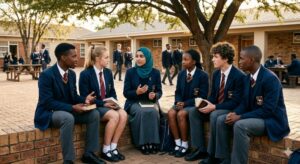
Making room for difference
Respecting different beliefs is about recognising that people deserve dignity and equal treatment, even when we see the world differently.
We can question without ridiculing. We can disagree without demeaning. We can stand by our own convictions while remaining open to understanding someone else’s.

Closing thoughts
Section 15(1) of the South African Constitution states that everyone has the right to freedom of conscience, religion, thought, belief, and opinion. The South African Secular Society emphasises that this freedom includes the right to choose not to align with any religious belief or system. We should be able to do this without facing discrimination, disadvantage or legal recrimination.
We believe that this choice should be available to everyone in both private and public spheres of society throughout their life, enabling individuals to live a fulfilling life on their own terms, free from the constraints of religious dogma.