
Introduction
Coming-of-age ceremonies have long served as vital milestones, marking the transformative journey from childhood into the responsibilities of adulthood. While these transitions were historically anchored in religious traditions, like Bar Mitzvahs or Confirmations, more families today are seeking meaningful ways to celebrate this evolution outside of a spiritual framework.
A secular ceremony focuses on the individual’s personal growth, their connection to the community, and the values they choose to carry forward.
Whether held at age 12, 16, 18, or at a moment of personal significance such as finishing school, taking on a first job, or leaving home, these ceremonies are a powerful and adaptable way to recognise that becoming an adult is both a personal and communal experience.
What is a Coming-of-Age Ceremony?
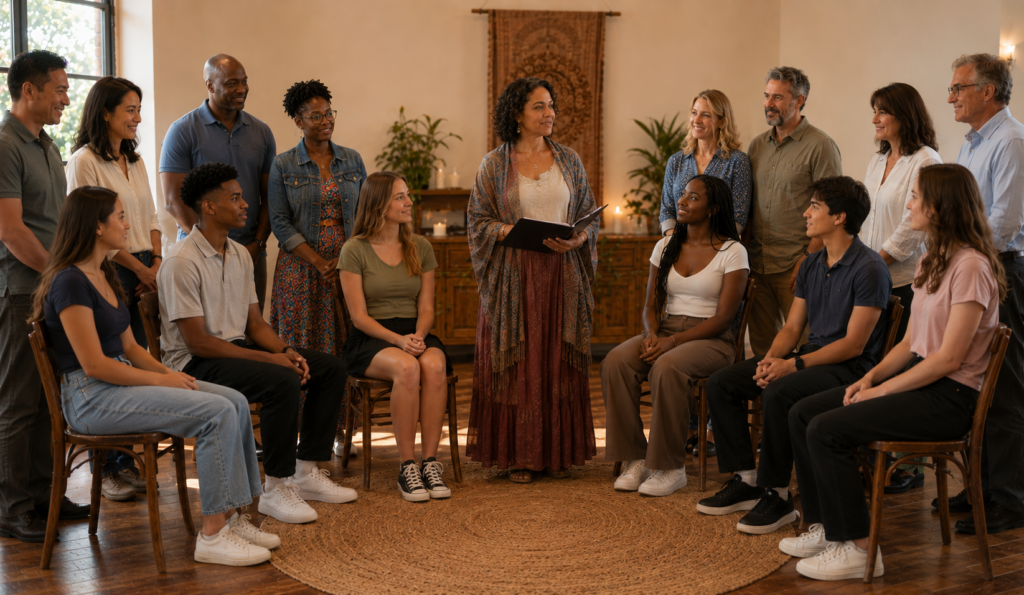
A coming-of-age ceremony is an event designed to acknowledge a young person’s transition into a new phase of life. Traditionally, many societies have marked puberty or entry into adulthood with rituals such as bar and bat mitzvahs, confirmations, and initiation rites. A non-religious ceremony draws from the same underlying purpose, which is recognising growth, but removes theological language and focuses instead on values, relationships, and personal meaning.
At its heart, a coming-of-age ceremony simply says: We see you. You are growing. And we are here to witness it.
These ceremonies can be deeply personal and tailored to the family and the young person’s preferences. Some may be formal, structured events; others may be informal gatherings in a home or outdoor setting. What matters most is that it provides space to pause, reflect, and celebrate a milestone.

Why is it Important?
For many young people, the leap from childhood to the next stage of life can feel both exciting and intimidating. A ceremony helps shape that experience into something grounded and supported. It offers several significant benefits:
Marking change
Human beings thrive on rituals because they help us make sense of time. Childhood often feels like an endless stretch of possibilities, and adulthood can arrive suddenly, seemingly brought about through exams, responsibilities, or societal expectations. A coming-of-age ceremony acts as a symbolic marker, giving the young person and those around them a clear moment to acknowledge transition. It provides a psychological anchor, helping them step into the future with intention instead of simply “growing up” silently and unnoticed.
Building identity
Identity does not form in isolation. Young people are constantly navigating who they are in relation to family, peers, and the world. A ceremony offers them an opportunity to voice their own values, hopes, and intentions. Instead of being told what adulthood should look like, they can actively shape their narrative. Adults may share stories about the young person’s strengths, highlighting who they have already shown themselves to be, which helps reinforce confidence and self-understanding. The ceremony also creates space for them to express personal goals or commitments ~ whether creative, academic, social or emotional.
Community connection
Growing up requires support. Having a community present, whether that is family, mentors, neighbours, or friends ~ signals to a young person that they do not have to navigate the road ahead alone. Community presence matters especially in non-religious households, where there may be fewer built-in opportunities for communal gathering. When a group stands together, witnesses the young person’s story and offers encouragement, it strengthens social bonds and reinforces that support exists outside the immediate household.

Emotional outlet
Adolescence is a period full of questions and big feelings. A ceremony gives young people permission to reflect openly, speak honestly and feel seen. Adults, too, benefit; parents or guardians often experience bittersweet emotions as they watch a child step closer to independence. The ceremony becomes a safe container for everyone to express pride, nostalgia, excitement and even uncertainty, allowing those feelings to be shared rather than held silently.
What Does a Coming-of-Age Ceremony Entail?
Because non-religious ceremonies are not tied to doctrine, they offer enormous flexibility. There is no single correct format, but certain elements help create a meaningful and cohesive experience.
Involve the young person
The most powerful ceremonies are co-created. Ask the young person what matters to them: Do they want something quiet and reflective? Something outdoorsy and spirited? Something humorous rather than serious? Invite them to help choose readings, music, or symbolic gestures. Giving them an active role reinforces ownership over their life transition.
Consider traditions
Even without religion, traditions can offer richness and symbolism. Some families choose to borrow practices from cultural heritage ~ lighting candles, planting a tree, tying a ribbon, or giving a symbolic object such as a journal, piece of jewellery, or family heirloom. Others create entirely new traditions: a circle of support where loved ones offer one line of wisdom each, or a moment where the young person shares a statement about who they are becoming.
Choose a theme
A theme gives the ceremony shape and focus. It could be based on values (courage, curiosity, kindness), personal aspirations (building a career, exploring creativity, learning independence) or life transitions (entering high school, finishing exams, turning 18). A theme helps guests understand why they are gathered and guides the tone of readings, speeches, and activities.
However, it is optional.
Plan activities
Activities bring the ceremony to life. Examples include:
- A memory-sharing segment where guests each share a small story about the young person;
- A symbolic action such as walking through a doorway, stepping across a threshold, or exchanging a childhood item for a “grown-up” one;
- A guided reflection, such as writing a letter to one’s future self;
- Music chosen by the young person;
- A communal craft ~ such as assembling a “book of wisdom” filled with messages from guests.
Activities should suit the personality of the young person. Not every ceremony needs to be serious. Playfulness, laughter, and shared hobbies can be just as meaningful.

Gather the community
Whether ten people or fifty, the gathering itself is what transforms a personal milestone into a communal one. Consider who the young person trusts ~ school friends, cousins, coaches, teachers, grandparents, neighbours. Their presence is more powerful than their speeches. The ceremony might take place in a garden, a living room, a community hall, a park, or anywhere that feels comfortable and accessible. Food and shared time afterwards help the celebration continue beyond the formal moment.
Alternatively, you can hold a group ceremony for a handful of young people at a similar stage of their lives.

Closing Thoughts
Non-religious coming-of-age ceremonies are not simply events. They are acts of recognition. They allow us to pause in a fast-moving world, to honour young people not for what they achieve, but for who they are becoming. They create space where individuality, values, emotion, and community come together without requiring any shared belief beyond the idea that every life deserves to be witnessed.
As families seek more inclusive, personal, and authentic ways to mark life’s milestones, these ceremonies offer a meaningful alternative, one rooted in humanity, connection, and the profound power of saying: You matter. We see you. We are here as you step forward.
If you’re considering a non-religious coming-of-age ceremony for a young person in your life and would like guidance or a bespoke ceremony designed to reflect their story, values, and personality, officiants in the South African Secular society would be honoured to help. They will work with families to craft meaningful, supportive and memorable milestones. To explore possibilities, discuss ideas, or begin planning, please feel free to get in touch. Together, we can shape a ceremony that feels authentic, affirming, and truly special.