
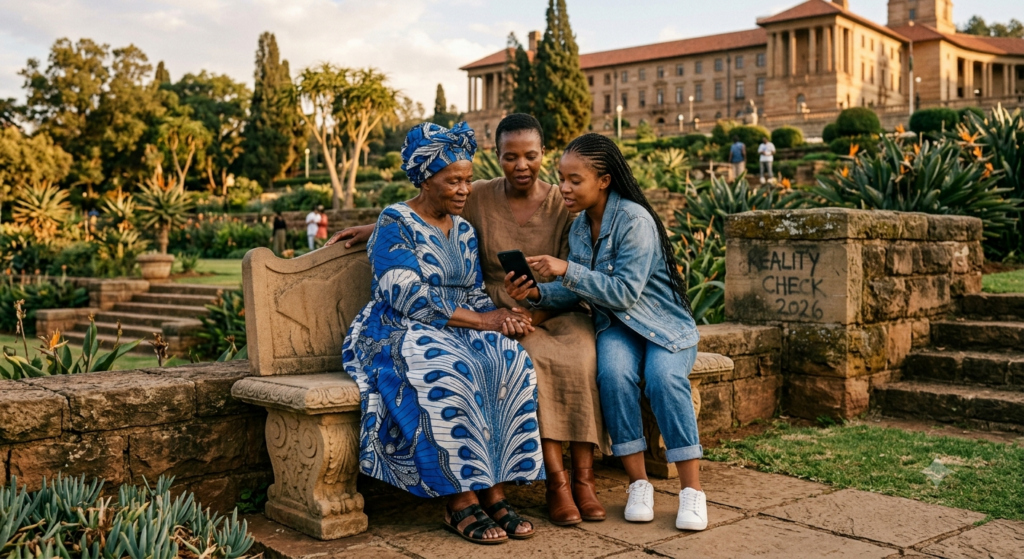
Every year on 9 August, South Africans commemorate Women’s Day, marking the anniversary of the 1956 march when more than 20,000 women united in protest against the apartheid pass laws. Their courage became a powerful symbol of resistance to injustice and a reminder that ordinary people can bring about extraordinary change.

Seventy years on
Seventy years later, there is much to celebrate. South Africa has one of the highest levels of women’s political representation in the world, with women occupying nearly half the seats in Parliament. Women are making significant contributions in science, education, business, healthcare, the arts and public life. More girls than ever before are completing school and pursuing higher education, opening doors that were once firmly closed.
These achievements deserve recognition. They demonstrate what can happen when barriers are removed and people are given the opportunity to develop their talents and contribute to society.
Equality worth pursuing
Yet Women’s Day is not only a celebration ~it is also a reminder that the work of achieving genuine equality is far from complete.
Gender-based violence remains one of South Africa’s greatest human rights challenges. Every incident represents more than a statistic; it is a person whose freedom, safety and dignity have been violated. No society can claim to value equality while so many women continue to live with the threat of violence.

Economic inequality also persists. Women are still more likely to earn less than men, to interrupt their careers because of caregiving responsibilities, and to shoulder a disproportionate share of unpaid work in the home. Although laws have changed dramatically over the past few decades, equal rights do not always translate into equal opportunities.
From a freethinking perspective, these issues are not matters of ideology or tradition. They are questions of evidence, fairness and human wellbeing.
Freethinkers seek to understand the world through reason, critical enquiry and evidence. When the evidence shows that one group faces greater risks, fewer opportunities or systemic barriers, it calls for thoughtful action rather than denial or complacency. Equality is not about favouring one group over another; it is about ensuring that every individual has the same chance to flourish.
Challenge the stereotypes
This also means questioning assumptions that have long gone unchallenged. Traditional ideas about what women and men “should” do have often limited both sexes. Women have been expected to carry most caregiving responsibilities, while men have frequently been discouraged from expressing vulnerability or taking on nurturing roles. A more equal society benefits everyone by allowing people to choose their paths according to their abilities, interests and aspirations ~ not outdated stereotypes.
Social justice is not achieved simply by passing legislation. It requires changes in attitudes, institutions and everyday behaviour. It means creating workplaces where talent is recognised fairly, schools where girls and boys are encouraged equally, homes where responsibilities are shared, and communities where everyone can live free from fear.
A secular society supports these goals because they are grounded in universal human rights rather than religious doctrine or cultural tradition. Every person deserves equal dignity, equal freedom and equal protection under the law simply because they are human.

Final thoughts
As we commemorate Women’s Day in 2026, we honour those who marched in 1956 by continuing the work they began. Their struggle reminds us that progress is possible, but it is never automatic. Each generation has its own responsibility to challenge injustice wherever it appears.
Women’s Day is therefore both a celebration and a call to action. We can celebrate how far South Africa has come while recognising how far there is still to go. Building a fairer society requires the participation of women and men alike, united by a commitment to reason, compassion and justice.
Rather than simply marking Women’s Day once a year, we can all contribute to a more equal South Africa by challenging stereotypes, supporting evidence-based policies, and treating every person with equal dignity and respect. If these values resonate with you, consider joining the South African Secular Society as we work towards a society built on reason, human rights and freedom of thought.